


Custom Boat Lifts vs. Standard Lifts: What You Need To Know

Boat lifts protect watercraft while making launching and retrieval more manageable for waterfront property owners. The right lift can affect how smoothly a boat enters and exits the water, along with how well it stays protected from waves, debris, and routine shoreline activity. Since lakes vary widely in depth, slope, and seasonal water levels, lift selection rarely follows a one-size-fits-all approach.
Understanding custom boat lifts vs. standard lifts means looking beyond basic capacity ratings. Lift design, configuration, and installation conditions all influence which system performs best for a particular shoreline. Some properties fit ready-made lift models without compromise, while others need a more tailored setup to handle unusual lake conditions or larger vessels.
Why Boat Lift Design Matters for Waterfront Properties
Boat lift systems raise watercraft above the waterline to reduce constant exposure to wave action, algae growth, and submerged debris. While the purpose stays consistent across lift types, structural design and installation environment shape how reliably the lift performs through the season.
The decision determines if the lake has firmer bottoms and consistent depth to support simpler installations, while uneven lakebeds and fluctuating levels demand more adaptability to maintain stability and predictable lifting.
What Defines a Standard Boat Lift System
Standard boat lift systems follow established designs that fit common boat sizes and average shoreline conditions. Manufacturers build these lifts with preconfigured frames and lifting mechanisms intended for typical recreational use, which makes them a practical option for many waterfront properties.
Because these systems use predictable configurations, installation tends to be more straightforward. Their components are widely available, and many models offer adjustment ranges that handle common variations in hull shape and water depth.
Typical Lift Capacities and Configurations
Standard lifts usually come in predetermined weight categories that align with common boat classes. Many models use adjustable bunks or cradles to support the hull evenly, which reduces stress points during lifting and storage.

Since these designs rely on standardized parts, property owners do find it easier to service or replace components as needed. That availability can be useful when a lift sees frequent daily use.
When Custom Lift Design Becomes Necessary
Some shorelines or boat setups push beyond what standard designs can handle comfortably. Larger vessels, unusual hull geometry, tight installation footprints, or inconsistent lakebed conditions may call for structural adjustments, so the lift remains stable and supports the boat evenly.
Specific configurations can include reinforced framing, modified bunk placement, or specialized supports that better distribute load and improve alignment. These changes aim to keep lifting smooth and consistent without forcing a boat into a “close enough” fit.
Water Depth and Shoreline Conditions That Influence Lift Selection
Water depth affects how much vertical travel a lift needs to fully raise a boat above the waterline. Shoreline slope also influences how the frame sits on the lakebed, which can change the lift balance once the boat is out of the water.
But shallow areas near shore may require longer positioning, so the boat reaches adequate depth for approach and exit. On steeper shorelines, stability becomes a priority, especially when waves or boat traffic add repeated motion.
Lakeshore Slope and Bottom Composition
Lakebed composition influences stability, since sand and gravel often provide more predictable footing, while soft sediment or organic bottoms require broader support to avoid uneven settling. Evaluating these conditions before installation prevents shifting that can throw off alignment and increase wear on lift components.
Structural Differences Between Custom and Standard Lifts
The difference between custom and standard lifts is flexibility. Standard lifts use fixed frame dimensions, and common bunk layouts designed to fit a broad set of boats, which works well when shoreline conditions and boat size fall within typical ranges.
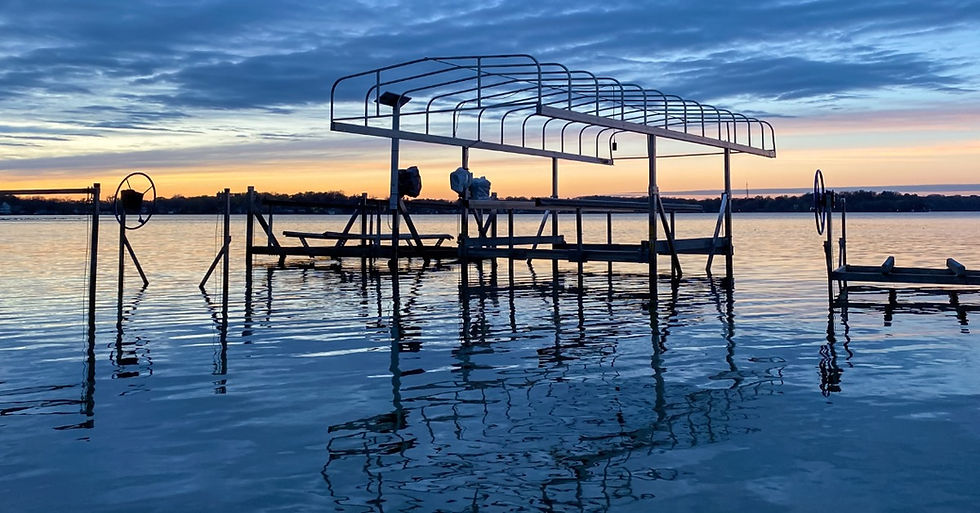
However, customized builds allow changes to frame width, support geometry, and bunk placement, so the lift matches the boat and the site more precisely. That extra adaptation can improve stability and reduce hull pressure points in challenging environments.
Performance, Durability, and Long-Term Reliability
Lift performance depends on structural strength and how well the system matches the shoreline environment. On lakes with frequent wave action or heavy traffic, stable framing and secure placement help the lift resist constant movement while supporting the boat consistently.
Materials need corrosion-resistant hardware, durable lifting components, and quality structural metals to help the lift hold up through seasonal exposure and repeated operation, especially when the boat stays elevated for extended periods.
Maintenance Expectations for Different Lift Types
Routine maintenance supports safe operation for any lift style. Do periodic inspections of cables, pulleys, winches, and hydraulic components to ensure peak performance. Then do a close review of structural areas that identify alignment issues, wear, and corrosion before they escalate.
More specialized configurations may include additional parts or adjustments, but the goal stays the same: keep the lift moving smoothly and keep the boat supported evenly. Regular checkups also catch small problems early, before they affect lift performance.
Choosing a Lift That Matches Your Watercraft
Boat size and weight should guide lift capacity, but balance and hull support deserve equal attention. A lift that runs close to its maximum capacity can struggle under wave motion or heavy daily use, which can increase mechanical strain and shorten component life. Hull design influences how bunks or cradles should contact the boat, and proper placement supports the boat's shape without concentrating weight in the wrong areas, which helps both the protection of the hull and the lift structure.
Consulting knowledgeable lift professionals can help property owners determine whether a standard configuration will properly support their watercraft or if adjustments are necessary for better balance and performance.
Selecting the Right Lift System for Long-Term Reliability
Choosing the right lift system requires balancing the characteristics of the boat with the realities of the shoreline environment. Standard lift models perform well where water depth, lakebed composition, and vessel size fall within typical installation conditions. However, certain waterfront layouts or heavier boats may require more specialized configurations to maintain proper support and stability.
Understanding the practical differences in custom boat lifts vs. standard lifts helps property owners determine which option will provide the safest and most reliable performance. When the lift matches both the watercraft and shoreline conditions, launching and storage become smoother while the boat remains protected between uses. Property owners who want guidance selecting the right lift system can work with experienced Shorestation boat lift dealers, like the team at On Pointe Contracting, who evaluate shoreline conditions and recommend lift solutions designed for reliable long-term performance.