


Floating Dock Anchoring: Techniques for Safety & Strength

A floating dock needs enough freedom to follow changing water levels without shifting so far that it becomes difficult to use safely. Its anchoring system controls that movement while allowing the structure to respond naturally to conditions on the water. The most effective floating dock anchoring techniques for safety and strength provide enough control for dependable waterfront use.
Pole Anchoring Controls Horizontal Movement
Pole anchoring uses vertical poles that pass through brackets attached to the floating dock. As water levels rise or fall, the dock travels vertically along the poles while the poles restrict excessive horizontal movement. Property owners gain a dock that can adjust to changing elevation without freely drifting across the waterfront.
Pole systems work best where the lakebed can securely hold the poles and the available depth gives the dock enough vertical travel to follow expected water-level changes. Extremely deep water or difficult bottom conditions can make this type of installation less practical. Evaluating those conditions first prevents the anchoring method from working against the physical limits of the property.
Cable Anchoring Uses Stable Connection Points
Cable anchoring connects a floating dock to secure points that control its position while leaving enough flexibility for movement on the water. Depending on the waterfront and system design, those connections may extend toward shore or other suitable anchoring locations. The amount of tension and the placement of each connection influence how much lateral movement the dock experiences.
Where those cables travel matter just as much as how firmly they hold. An anchoring line that crosses an active approach to the dock can interfere with watercraft access, while poorly positioned connections can pull the structure in an undesirable direction. Planning the complete cable path allows the anchoring system to control the dock without creating obstacles around it.
Bottom Anchors Secure a Floating Dock From Below

Bottom-anchor systems connect the floating structure to anchors installed or positioned on the lakebed. Chains or comparable connections extend upward from those anchors, giving the dock room to respond to surface movement while limiting how far it can travel from its intended location.
The distance between the dock and lakebed affects how installers configure those connections. A deeper location requires a different amount of working length than a shallow site, and the system still needs enough flexibility to accommodate normal changes in water level. Selecting the anchor itself also requires an accurate understanding of the material beneath the water, an issue that becomes particularly important on waterfronts where bottom conditions vary.
Stiff-Arm Anchoring Controls the Dock From Shore
Stiff-arm systems use rigid structural members to connect a floating dock to secure points on shore. The arms restrict horizontal travel while their configuration allows the dock to follow vertical changes in the water. This approach can work particularly well when the shoreline provides suitable attachment locations, and the dock sits within a practical distance of them.
Shoreline elevation and the distance to a secure connection point determine whether stiff arms can control the dock without restricting necessary vertical movement. The arms also need a clear operating area as the dock changes position.
Lakebed Conditions Affect How Anchors Hold
The material beneath the water determines whether certain components can establish the secure connection an anchoring system requires. Soft sediment responds differently to anchoring hardware than a firm or rocky bottom, so an approach that works at one waterfront may not suit another property nearby.
Evaluating the lakebed before choosing the system allows the anchoring plan to reflect the conditions that will support it. When the bottom doesn't suit a preferred technique, installers can choose an anchoring approach designed around the site. That decision gives the entire system a stronger foundation for controlling dock movement.
Dock Size and Configuration Increase Anchoring Demands
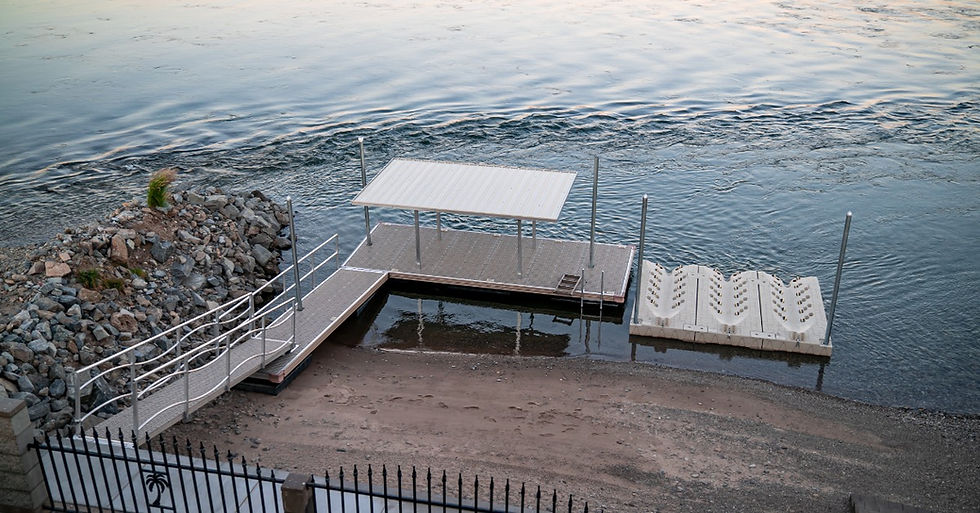
A longer floating dock exposes more structure to movement and places anchoring points across a larger footprint. Adding slips or changing the direction of connected sections can alter how forces transfer through the system as well. The anchoring plan also needs to account for how owners use the dock and the watercraft it supports. Floating PWC docks need consistent positioning so riders can approach the platform and move their watercraft on or off the dock without excessive shifting.
Scale becomes especially important for marina dock systems because multiple connected sections need to function as a coordinated waterfront layout. When a marina owner plans an overhaul or dock redesign, the new anchoring configuration needs to reflect the redesigned footprint. Considering anchoring during the broader design process allows the dock layout and its support system to work together from the beginning.
Waterfront Exposure Determines the Forces Anchors Must Handle
Two floating docks with similar dimensions can place very different demands on their anchoring systems when they sit in different locations. A protected waterfront may experience relatively limited surface movement, whereas an exposed site can subject the dock to stronger wind or sustained wave action. Those conditions affect how force travels through the dock and reach its anchoring points.
Frequent wakes in a busy boating area can also create repeated movement that a quieter location rarely experiences. The dock shifts with each disturbance, and its anchoring components repeatedly control that travel as the structure settles back into position. Accounting for the site's actual exposure gives installers a more realistic basis for determining how much control the anchoring system needs to provide.
Can You Combine Floating Dock Anchoring Methods?
A single anchoring technique won't suit every section of every waterfront. A dock that begins in shallow water and extends into substantially greater depth, for example, can encounter different installation constraints across the same structure. A larger dock configuration or unusual shoreline can create similar challenges when one anchoring approach cannot effectively control the entire structure.
Combining methods can address those differences, but each component needs to contribute to one coordinated system. Adding restraints without considering how they interact could restrict necessary movement or transfer force to unintended parts of the dock. A site-specific plan can determine whether one anchoring method provides the necessary control or whether different portions of the structure call for a tailored approach.
Build a Stronger Floating Dock Setup
Choosing floating dock anchoring techniques for safety and strength requires more than finding a method capable of holding a dock in place. The anchoring system also needs to accommodate the site's physical conditions and the movement the dock will experience during regular use. Matching those requirements allows the structure to follow the water without giving up the positional control that makes the dock practical to use.
On Pointe Contracting works with waterfront property owners throughout Michigan on floating dock systems and related waterfront projects. Whether you're planning a residential dock or evaluating anchoring as part of a larger marina redesign, contact On Pointe Contracting to discuss a system suited to your waterfront.